
We lost in Afghanistan by having no plan to win
Jul 15, 2026
Career diplomats and soldiers will tell you that war is complex. It’s not: groups of armed humans apply force against each other to exact benefits for their tribe.
“Gentlemen, I want to be clear about what we are not doing. This is not a nationwide counterinsurgency strategy. No way.”
― President Barack Obama speaking to General Stanley McChrystal, Obama’s Wars, Bob Woodward
“It can’t work.”
― Richard Holbrooke, on the surge plan in 2009, Obama’s Wars, Bob Woodward
It’s as simple as it is ancient.
Today’s tools of war – the smartbombs and cyberattacks, helicopters and drones, tanks and artillery – look complex and impressive, and the experience of fighting certainly is.
A decision to engage in warfighting hinges on a single assumption: that we are fighting for the right reasons, and it will be worth the costs.
I left the SAS 10 years ago and consult to companies about personal and organisational resilience based on my time fighting in Afghanistan.
At the end of my presentation, I show a picture of my two-year-old son, Harry. He is called Harry Locke Wales, named after one of my team leaders, Sgt Matthew Locke, who was killed as we were clearing the Chora Valley in 2007. He was on his second tour, and it was the third time in 18 months the allies had cleared Chora. He left behind a wife and a 13-year old son.
I am often asked if I would be okay with Harry joining the army.
I often say “yes”, but add that I’d like him to go to SAS because it’s one of the best-led units.
I don’t say that anymore, and not because of allegations of SAS committing war crimes.
It’s because my experience prosecuting a war under government direction was not a positive one.
It’s because the objectives set during the Afghanistan surge in 2009 were unachievable, but we stayed the course anyway.
It’s because it was politically expedient to overuse special forces in combat, to the point of systemic and moral failure. Now we are looking at punishing some of those who returned from the failed expedition.
Afghanistan was an under-resourced war, led by the US with fractured military-civilian leadership and feeble public support, against an enemy with sanctuary in adjacent Pakistan. After ejecting al-Qa’eda from the country in the months after the September 11 attacks, the allied war effort shifted focus to defeating the oppressive Taliban.
This was “mission creep”, and a proposition that could not be achieved due to a weak central government, insufficient forces and a neighbouring sanctuary. The Taliban knew they could simply bleed us for a generation in the Graveyard of Empires. I deployed on my first tour in 2007 as an SAS troop commander.
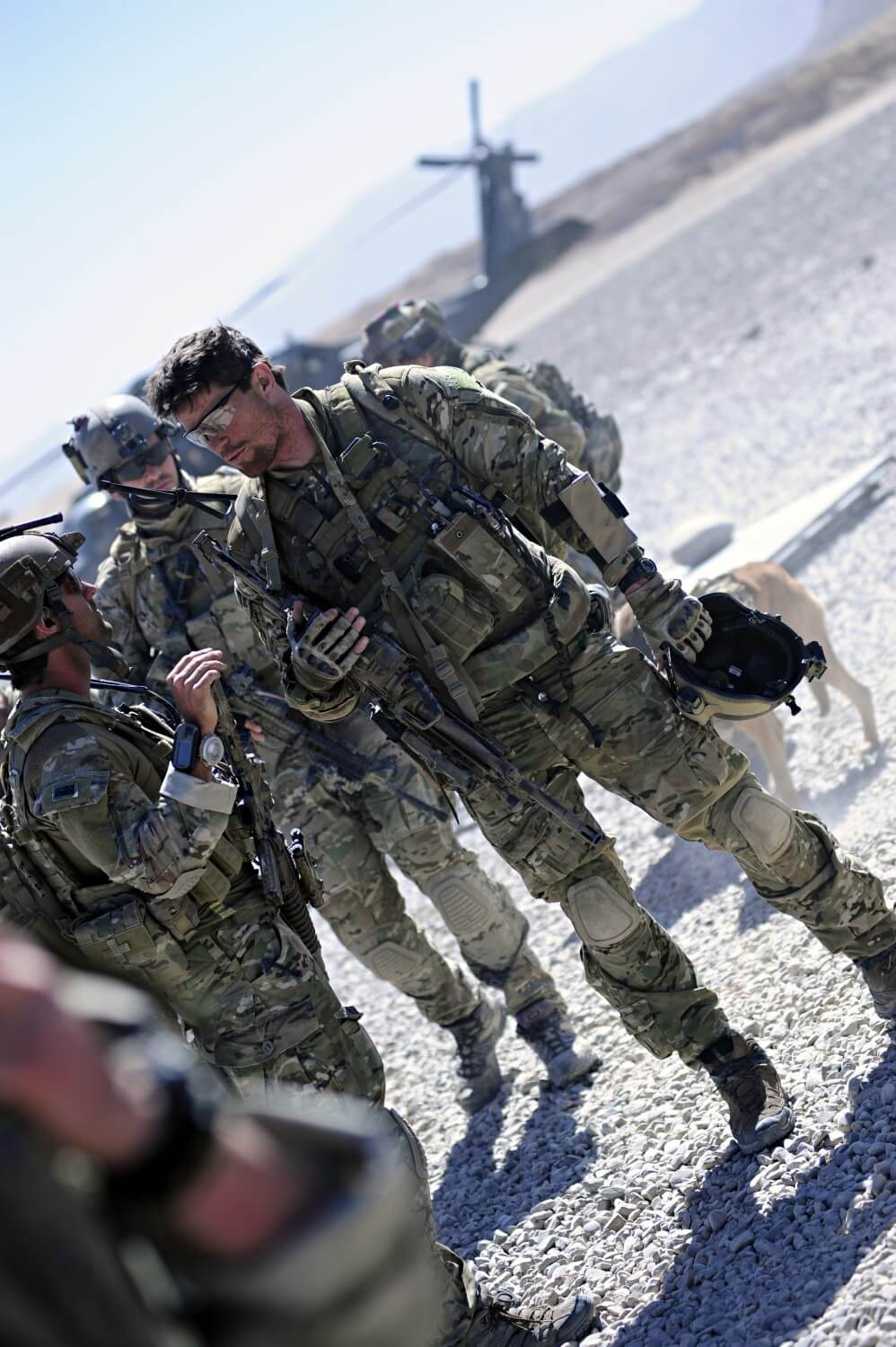
It was exciting – the war’s outcome hung in the balance. The missions supporting coalition operations were tough, the experience was invaluable, and we were making an impact on the security of Oruzgan.
We were defending Australian soldiers in depth, by targeting the Taliban deep in their areas of control.
By my last tour in 2010, the allied strategy had vacillated for years.
The fighting was more intense than it had been. In four months, 10 Australians were killed, some by local forces under their care.
There was a flagging national urgency to achieve our objectives.
In October 2010, Australia held its first parliamentary debate about our engagement, nine years after the commitment began and only after the Greens forced debate as part of their deal to form Labor’s minority government.
Prime minister Julia Gillard reiterated Australia’s troops would remain to “prevent refuge for al-Qa’eda and to support the US alliance”.
If strategy is considered to be the “art of distributing and applying the military to fulfil the ends of policy”, then Australia was not showing enough humility in this regard.
The expedition of 1550 troops and 50 civilians would not deliver lasting change in Afghanistan, even as part of a broad alliance.
Local government corruption was severe and its reach marginal, local forces were in disarray, and the sanctuary of Pakistan was too helpful for the enemy.
The issue I have is not so much the losses.
It was how slow we were, as a military and a nation, to recognise the war was lost.
At the end of 2010, Bob Woodward’s insider account of strategic war planning, Obama’s Wars, pointed to the friction between US military leadership and Obama’s administration.
The US military leadership was trying to transplant the counter-insurgency strategy from Iraq, which to be effectively resourced needed an estimated 600,000 troops. Woodward made clear the president was not interested in pursuing the strategy.
The result was strategy by committee: a surge of 30,000 troops, with a withdraw limit of 18 months, enough for the Obama administration to prove it couldn’t work.
A “surge” of 5 per cent of the force needed, to deploy, and return, in an 18-month window.
This was the clearest signal, to the world, that US civilian leadership had lost confidence in the war.
The Taliban must have been cheering.
All they needed to do was keep a standing force in Afghanistan and bide their time in Pakistan. This tactic has been employed by insurgencies for generations, and standing armies can do little to stop it.
I was on my last of four tours in 2010 and had a sinking feeling we would not achieve lasting change, and victory was out of the question.
Over three months, we lost 20 more soldiers, and a majority of the alleged war crimes have been committed during this period.
Afghanistan, our longest war, took 12 years, cost at least $8bn and 41 lives, not including the many suicides. As of 2018 at least 53 per cent of Oruzgan remained under Taliban control, including the Chora Valley.
As painful as it is to say, it’s called losing.
We did not achieve what we agreed was our national strategy.
The time will come again where we need to make a choice about fighting in another simple, ancient war. Entering a war is not hard. Exiting a war, when it becomes clear that the costs are outweighing the results, is incredibly difficult.
If my son Harry joins the military, there is every chance he could be sent to fight along the western clifftops of Taiwan, or the freezing mountains of North Korea. I truly hope the decision has been considered deeply, and our criteria for success is clear, achievable and timebound.